On the Banks of the Danube: A Three Capitals Tour | Vienna (Austria), Bratislava (Slovakia), Budapest (Hungary)
On the Banks of the Danube: A Three Capitals Tour
Vienna (Austria), Bratislava (Slovakia), Budapest (Hungary)
1 to 4 September 2019
In the name of Allāh, Most Beneficent, Most Merciful
The UK would be leaving the European Union and Brexit would be taking place in the coming year. I decided to visit a few main European cities before the UK departed the Union. Mawlānā Ilyas Gajia of London is a friend and travel companion who has travelled with me a few times to India, benefitting me tremendously with his resourcefulness, organization, and prior travel experience. I contacted him to ask if he would like to join me on this trip. He agreed, so I requested him to plan the itinerary. Ismail Alibhai, who manages the website Zamzamacademy.com and is a long-term travel partner as well (both in the UK and Scandinavia) also agreed to come along. We decided to ask Mohammed Afzal-Dilloe, another friend and pharmacist from Rotterdam, Holland, if he wanted to accompany us. He had voiced an interest in the past to do so, and he eagerly agreed. Now that the team was ready, we decided that we would fly into Vienna, Austria, then travel by train to Bratislava, Slovakia, and onto Budapest, Hungary, from where we would catch a return flight. It would be a four-day tour of three of the capital cities on the Danube.
The Danube is the second-longest river in Europe after the Volga in Russia, but is also the river running through the largest number of countries in the world. It originates in Germany and flows southeast for 1,770 miles (2,850 km), passing through or bordering Austria, Slovakia, Hungary, Croatia, Serbia, Romania, Bulgaria, Moldova and Ukraine before draining into the Black Sea. The largest cities on the river, which are also capitals of their respective countries, are the three cities we visited, along with Belgrade in Serbia.
The following are the details of this tour, written two years later in August 2021 and drawing on the notes taken by Mawlānā Ilyas during the trip.
Sunday 1st September (Vienna)
Sunday Morning to Luton Airport
We departed Clapton at 5 am for Luton airport. Hafiz Asad Mulla dropped us off. We were booked on the Easyjet flight 2463 to Vienna. Unfortunately, the flight got delayed by an hour on the tarmac. Eventually, we took off and reached Vienna without any further issues. Afzal who had travelled directly from Rotterdam had already reached before us and was waiting for us.
We decided to take a train and metro S7–U1 to the Ballgasse area of the city, close to the centre, where we had rented an apartment. It did not take us long to find it and we reached there at 1 pm. The underground subway system is a clean and efficient way to travel around Vienna. Taxis tend to be more expensive, and a hired car—just like in London—provides parking challenges within the busy metropolis. We purchased a group pack of tickets. The key for the apartment had to be collected from a cafe a few doors away. It was a lovely apartment on the fourth floor of an old stone building, with a very small lift that could only carry two people or so at once. There was one bedroom with a large queen size bed, a large living room with two beds, and a separate kitchen. It was decided that Mawlānā Ilyas and I would share the king size bed in the bedroom, while Ismail took the sofa bed and Afzal the single bed.
Sunday Afternoon Walking Tour of Vienna
Since we had not slept much at night, we decided to rest till 2:30 pm. Mawlānā Ilyas had booked a two-hour walking tour of the city with Prime Tours for 3 pm. We had some snacks from what we had brought along with us and reached the meeting point for the tour on time. The tour was very informative and covered much of the main landmarks of Vienna, with a history of the Hapsburg Dynasty and the Austro-Hungarian Empire. Vienna has many grand historical buildings whose architecture is to be admired. There were a number of references to the Ottoman Empire, since the Austro-Hungarians had a number of run-ins with the Ottomans. Ottomans had reached all the way to the doors of Vienna on the other side of the Danube River but were unable to enter. All of the historical details made the tour that much more interesting. Some of the landmarks covered in the tour are as follows: Albertina Square with Albertina Museum, Burggarten Court Gardens, the Palace Gate, Heldenplatz (Heroes’ Square), Schweizerhof Courtyard of the Hofburg Palace, the Josefsplatz Square therein, the Monument against War and Fascism, Neuer Markt Square, Imperial Crypt, the Graben (one of the most famous streets in Vienna’s first district, in the city centre), Stephansplatz Square, the Teutonic Order Building, Mozart House, St. Stephen’s Cathedral (Stephansdom), the State Opera House, and some lovely parks. 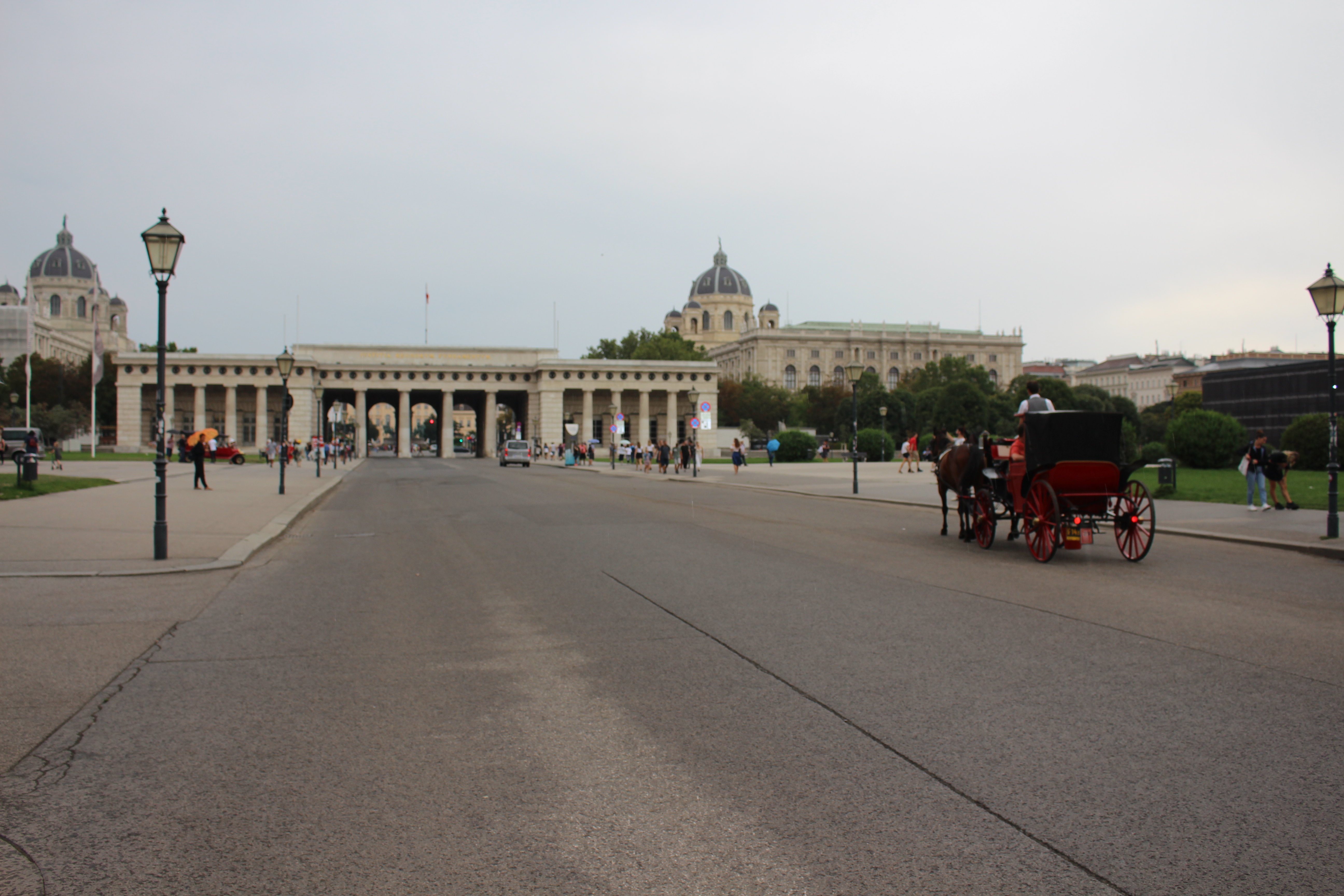
There were about thirty or so people in the tour, and it appeared that we were the only Muslims, though we did see many other Muslim tourists in the city. When the tour was completed, we gave the tour guide a tip. These walking tours are a beneficial, easy and inexpensive way to get to see the main features of a city. They operate in many of the main cities of the world; London has at least a dozen or so of these free walking tours. All that is required is that the guide be tipped whatever one feels it is worth at the end of the tour. On the way back, at about 6pm, we had some refreshments at an Aida Café, which is renowned for its cakes and pastries and had been recommended to us as one of the best in Vienna. I think we found it a bit overpriced as we spent over £30 for a few refreshments for the four of us. While there, we saw a family from one of the Gulf countries in which the women folk had ingeniously covered their faces with large face-masks, most likely to get around the ban on niqabs, which have been banned in Austria since 2017. How would anyone have known that COVID would soon compel everyone to wear a form of niqab on their faces in public? We returned to the apartment for 7 pm.
Sunday Evening at Masjid Hidayah and Masjid Ibrahim
I had a Whitethread Institute Open Day program to attend online. Azfal was tired so he stayed in the apartment with me while Ismail and Mawlānā Ilyas left to find a masjid to pray Maghrib there. They made it to Masjid Hidayah, full of Tunisians and Egyptians. A Tunisian brother there conducted a short lesson from Imām Nawawī’s Riyāḍ al-Ṣāliḥīn. May Allāh bless the author; would he have ever thought of his book being taught in Vienna? Maulana Ilyas spoke with the brother who advised him to visit Masjid Ibrahim, as that was the Tabligh Markaz for Vienna (Löhrgasse 3, 1150 Wien, Austria), and recommended for him to meet Brother Arshad there. They took the Metro to Löhrgasse and called brother Arshad. He offered to come and pick them up at the station but they said they would make their own way to the masjid. They reached the masjid and met with Brother Arshad and a group (jamaʿah) who had come from Italy. Brother Arshad is a well-connected individual and it turned out that he was acquainted with my father-in-law. My father-in-law had visited Vienna and done some religious work there some years earlier.
Our companions were offered some drinks and snacks whilst they waited for ‘Ishā’ and learnt that Vienna has some 160 to 200 masjids/semi-masjids (muṣallās), nearly one by every metro station. After ‘Ishā’ prayer, a small talk took place and Maulana Ilyas translated it in English for some of the English-speaking attendees. Before departing they confirmed a lecture for me for the next day after Maghrib.
They returned to the apartment by 10 pm. My Open Day program had also finished by then and we shared some food together. I had some pies and hummus from home, Mawlānā Ilyas some burgers his mother had made, and Ismail and Afzal had a selection of snacks. We had been unsure of what kind of ḥalal food we may find during our travels and thought this food would carry us some of the way. Alḥamdulillāh, it did.
Monday 2nd September 2019 (Vienna)
Monday Morning at the Institute of Islamic Religion
We prayed Fajr at 5:30 am after which I gave some advice about travelling and the correct intention to have, followed by a ten minute dhikr and meditation session. We then slept for a while till 9:30 am. I had booked an appointment at 11.30 am with Dr Elif Madani, who heads the Institut Islamische Religion (Institute of Islamic Religion) in Vienna. Their campus is located in the south of the city. We had planned to go there by metro, but due to heavy rain we took a taxi instead using the Bolt app. The driver was an older Turkish gentleman, who was very humorous and spoke in Turkish; we tried our best to understand what he said. Apparently, there is a significant community of Turks in Austria.
At the Institute, we met Dr Elif and her staff. She is also of Turkish background. The Institute is responsible for training teachers and lecturers for Islam in Austrian secular schools. Many countries in mainland Europe have tried to integrate the training of Muslims Imams and teachers within their universities and educational establishment. It has not been a very successful enterprise as the Muslims don’t always retain much autonomy over what they teach. We were able to get a better understanding of Islam in Austria and Germany from our discussion, as one of the staff was German and compared the two approaches for us. Gernot Galib Stanfel, who is a historian and musician, gave us a tour of the building. It included a tour of an exhibition of Muslim artifacts from Austrian history that he has collected.
The Ottoman Empire had threatened to conquer Vienna twice, first in 1529 and then in 1683, with the former known as the Siege of Vienna from September to October 1529. However, after the Ottoman defeat at Vienna the Habsburgs gained the upper hand and also captured Hungary and Croatia from them.
Islam is the largest minority religion in Austria and is practiced by at least 8% of the population. We saw Muslims all over town; many would greet us with salām. Islam has been an official religion in Austria since 1912, as the “Islam Law” was brought in by the Habsburg Emperor Franz Joseph after Austria’s annexation of Bosnia-Herzegovina. Under the law, Muslims, like other faith groups, were guaranteed wide-ranging rights, including religious education in state schools. Hence, teachers are trained at the institute for this purpose. The Austro-Hungarian empire occupied Bosnia and Herzegovina in 1878, which led to many Bosnian Muslims coming and studying in Austria, where they established Islamic societies. However, most Muslims came to Austria during the 1960s as migrant workers from Turkey and Yugoslavia. There are now other Muslim communities of Arab and Afghan origin. We also saw many Syrians who had recently arrived as refugees.
Unfortunately, we were told that the situation for Muslims has deteriorated in the last several years and Islamophobia has increased. It used to be much better before, they said. In October 2017, the Austrian government passed a law effectively banning the face veil even though only 100–150 women are said to cover their face in one way or another. This was despite thousands protesting the ban. In European countries, the bans are usually upheld by the European Court of Human Rights (ECHR). In October 2018, they also banned headscarves for children in kindergarten.
We thanked the staff for the very informative session and departed at 12:45 pm. The metro station was a few minutes away and we wanted to get to the Vienna Central Mosque (Islamic Centre of Vienna) which is on the bank of the Danube River. It is the largest mosque in Austria and is located in Floridsdorf, Vienna’s 21st district. Vienna is divided into numbered districts, which helps in navigating through the city. Ẓuhr congregation was over by the time we reached, so we prayed our own.
Monday Afternoon with Brother Hasan at Keplerplatz
After Ẓuhr we took a bus to the metro station, then a metro to district 10 /Ruemanplatz/Favoritten. We mistakenly got off at Keplerplatz, but it turned out to be for good reason. Allāh decrees as He wills and He is the best planner. As we emerged from the subway, we met a Syrian brother, and what a nice encounter this was! His name was Hasan and was a very polite and humble person. He nostalgically addressed me as Shaykhanā, Shaykhanā (“Our Shaykh, Our Shaykh”) right away. It seemed as if he was missing the company of his Shaykhs back in Syria. He had arrived as a refugee and was very concerned at the plight of the Syrians refugees in the city. He was also very worried about his own children. He spoke about many Syrian women from religious families, who had removed their hijabs and niqabs after coming to Vienna. It appeared that he had a lot of frustration but no one to share it with. We listened to him solemnly and made a du‘a’ that Allāh preserve their belief and improve their state.
He said there are many Muslims in this area and he would show us a good place to have (if I recall correctly) Syrian food, but the place was closed. He took us to another joint where we had some fine Turkish food instead. You can never go wrong with Turkish food. It is generally always cleanly prepared and quite standardised. You know what you are getting. Afzal insisted on paying for the meal, saying it was on him.
After lunch, Hasan took us around the area for about half an hour, including through an outdoor market with many Arab vendors. After this he departed and we went our way. He still communicates with me sometimes over text messages. It has been my experience in many countries in the world, such as in the United States, South Africa, Syria, Greece, and Malta, that someone would approach or greet me just by seeing my outfit and provide assistance if needed.
We proceeded towards the main station of Vienna, HauptBahnhof Wien, to check for tickets to Bratislava, Slovakia. We were considering departing in the evening as opposed to the next day as originally planned. The trains station is huge. On the OBB Trains ticket counter we inquired about prices and times for trains to Bratislava. We were informed that it would take nearly an hour and cost €10 each. We decided to go the next day as it was already 5 pm and would be dark soon in Bratislava. We were told that trains depart every seventeen minutes past the hour from this station. We took a metro to Stephensplatz, the closest station to our apartment, and rested in our apartment for an hour. Stephansplatz is a square located at the geographical centre of Vienna, named after its most prominent building, St. Stephen’s Cathedral, which is considered one of the tallest churches in the world.
Monday Evening Giving a Talk at Masjid Ibrahim
We prayed ‘Aṣr at 6:30 pm, had some tea and left for Masjid Ibrahim for the talk they had scheduled for me. It is a small to medium sized masjid, nothing like the Markaz Mosques of the UK. After salat, an announcement for the talk was not made. Nonetheless, there was a small group of people who remained behind. I gave a talk about the various manifestations of īmān (faith) in people’s lives. Since there were people of various languages, I had to alternate between three languages: Arabic, Urdu and English. It was the first time I had given a talk in so many languages at once!
After the talk they served green tea and biscuits and we had a discussion about Islam in Vienna. One of the convert brothers who spoke English really liked my green Egyptian scarf. It was my favourite one and a particular shade of green, which I had acquired after a lot of effort from the Khan al-Khalili Souq in Cairo. However, Allāh put it in my heart to gift it to him. He was over the moon, and I was happy to see that he was pleased. Alḥamdulillāh, since then two friends acquired over a dozen of those scarves for me in various colours. Allāh has promised a multiple return for anything given in His path. I carry a scarf because it provides utility. It can be used to cover, adorn and warm oneself, to spread as a prayer mat, to use as a protective pillow cover when using someone else’s bed, to use as an eye cover to take a nap in the daytime, or to roll up and use as a lumbar support when sitting on an uncomfortable seat. It is a custom of Yemeni, Malay, and Subcontinent scholars to keep one slung over their shoulders, but I have not been able to find it used this way by the Messenger of Allāh (Allāh bless him and give him peace). However, there are reports of him using such shawls or sheets to drape over his head (qinā’).
We left to perform ‘Ishā’ at another masjid close by, this one run by the Bangladeshi community. For some reason, its entrance was through a Bangladeshi grocery store. We then returned to Stephensplatsz station and stopped by a café for some fish and chips. The Muslim attendant ensured us that it was cooked separately and there was no cross-contamination. We then decided to take a short stroll as it is not good to sleep straight after eating. However, it started to drizzle a bit. A few brothers who looked North African approached us from the other side of the street, greeted us with salām and insisted that we take their umbrella. We politely refused as the apartment was not far away and the rain was not causing much inconvenience. They were prepared to expose themselves to the rain and hand us their umbrella. It reminds us of Allāh’s words: “They give them preference over themselves, even if they themselves are needy. Whoever is protected from his own selfishness—it is they who are successful” (Qur’ān, 59:9). It was beautiful to see the vibrancy of Islam: people willing to sacrifice their own comfort for their brethren in faith (may Allāh reward them abundantly).
The next morning, we were leaving for Bratislava and onto Budapest, so we packed up and had our final sitting with Afzal. He was going to return home to Rotterdam the next day due to work commitments.
Tuesday 3rd September 2019 (Vienna, Bratislava, Budapest)
Tuesday Morning to Bratislava
After Fajr at 5.30 am, I requested Mawlānā Ilyas to impart some advice and reminders to the group. He did so and Brother Afzal expressed his appreciation that was very reassuring for Mawlānā Ilyas (may Allāh reward him). This was followed by a short meditation and dhikr session like the day before. We did our final packing. There was still a little of the hummus (chick pea and sesame paste dip) my wife had made for us. This was finished off with Tesco croissants and tea and biscuits. One of the ways to travel without breaking the bank is to avoid eating out too much.
At 7:45 am, we left the apartment to get to Wien Simmering station. The Bratislava train was due to depart at 8:22 am, but we got there by 8:05 am. This station was much smaller than the main station we went to yesterday. We tried the machines at the station for a Bratislava to Budapest ticket but it wasn’t available for purchase. The price was showing at €30 per person. We called the ÖBB train company who advised that we wait until Bratislava but the price could be a different there. We decided to wait. Our experience with train travel in the UK has been that it is always best to purchase train tickets in advance, as they charge exorbitant rates for tickets for same day travel. However, here it was actually better that we waited.
The Vienna to Bratislava train had started its journey from the main Hauptbanhof Station at 8:17 am and arrived at Simmering on time. We had decided to catch it from Simmering, because it was easier to reach this smaller station. The train was very comfortable and arrived in Bratislava Station for 9:30 am.
Arriving in Bratislava
Bratislava’s main railway station (Bratislava Hlavná Stanica) is relatively small and easy to get around. Once there, we stored our luggage in their cloak room for €2 apiece. Later we saw that large lockers were available for €2–3, and all our bags would have fit into one of them. Back in the ticket hall we purchased our tickets to Budapest. To our astonishment, they were only about €14 per person here, considering the distance is 123 miles (198 km) and the journey take two hours and thirty-five minutes (similar to London to Preston). It was also for same day travel, which was so much cheaper than in the UK.
Mawlānā Ilyas had booked a walking tour of Bratislava[1] for 10 am. We caught a local tram to the meeting point, which cost only €0.70. Google Maps is excellent for navigation in these countries as it also shows exactly which bus or tram to take and the estimated time of the journey.
I think the name of our guide was Roman, who was a friendly, funny guy and an excellent storyteller possessing knowledge about the Second World War and the communist history of Bratislava. Bratislava was originally known as Pressburg. We toured all the important landmarks in the old-town, starting with the Main Square (Hlavne Namestie), the famous street statues, the National Opera, and the Cathedral. We then crossed the old city walls and toured the new and the old Parliament, Michael’s gate, and the Bratislava Castle high up on the hill. The castle provides a spectacular view of the surrounding areas and the Danube River from its well-kept grounds.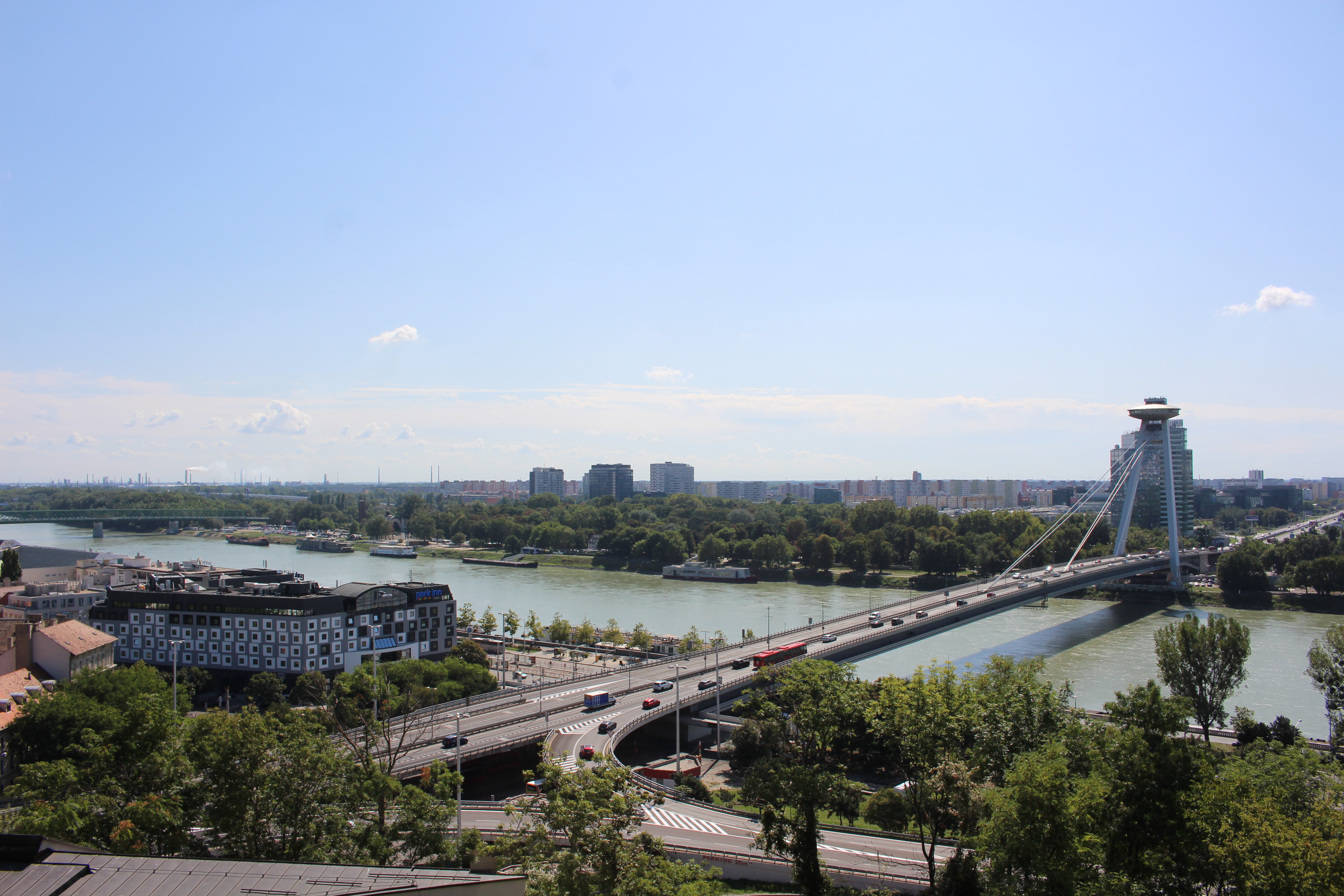
The tour was about to come to an end, but we had to excuse ourselves at around 12:55 pm since we had planned to take the 1:57 pm train to Budapest, and we still had to find somewhere to perform Ẓuhr. We searched for a mosque online but none came up. We then discovered that since mosques are not officially allowed in Slovakia the Muslims operate one as a “community centre.” Slovakia is the only member state of the European Union without an officially recognised mosque. In fact, in 2016, Slovakia passed legislation to effectively block Islam from gaining official status as a religion in the country. The only unofficial “mosque” (apparently in the whole country) is called the Islamic Centre of Cordoba (Kultúrne Centrum Córdoba), and it was supposed to be close to where we were. However, it was not at all easy to locate. After asking around and consulting the navigation, we finally found it down a narrow alleyway between two shops: Side Kebab and Madal Bal. Apparently, if the gates to the alleyway are closed, the sign for this unofficial mosque can be seen, but not when the gates are open. The address for it is 31 Obchodná, Bratislava. Unfortunately, in the same alleyway is the entrance to a bar and another seedy looking joint.
We did wuḍū’ and prayed Ẓuhr at 1.20 pm. Māshā Allāh, nearly half the small congregation were Slovak converts, and the others were immigrant Muslims including an Egyptian. We were unable to spend too much time there, but in the few words we exchanged, we learned that there were not many Muslims in the country. According to some sources, in 2010 there were only about 5,000 Muslims in Slovakia representing fewer than 0.1% of the country’s population. Also, since Bratislava has recently emerged from behind the iron curtain, there are not many employment opportunities there either.
The Ottomans from the time of Sultan Sulayman the Magnificent had taken the southern-central parts of Slovakia, and had also besieged what was then Pressburg in 1529, but failed to take it. After the Battle of Vienna in 1699, they lost Slovakia and Hungary. Hence, Bratislava never came under Muslim rule.
Slovakia at present has one of the lowest number of foreigners compared to other countries. Slovakian politicians have publicly stated that they would only accept Christian refugees. However, one spokesman said, “We could take in 800 Muslims but we don’t have any mosques in Slovakia, so how can Muslims be integrated if they are not going to like it here?”[2] Unfortunately, due to many global events, nationalist tendencies have been heightened in this culturally and racially largely homogeneous country. Walking through central Bratislava you will hardly see any non-white people—a striking contrast to other capitals in Western Europe.
May Allāh grant the Muslims there better and more permanent official masjids and improve their situation, and allow the Slovaks to benefit from Islamic contributions.
Tuesday Afternoon to Budapest
We quickly departed for the train station using the same metro we had used earlier, and arrived with about fifteen minutes to spare. We collected our luggage from the lockers and went to find some Kofola, the local drink the guide had recommended to us. It is the major rival of Coca-Cola and Pepsi in Slovakia and the Czech Republic, and became very popular in the 1960s and 1970s during communist times because it substituted for Western cola drinks that were expensive and considered for high society. We found some and it proved to be a pleasant drink. We searched for it again in Budapest but could not find it there. We still had some snacks with us so we had them for lunch. While we were waiting for the train on the platform, we became a bit of an attraction ourselves. This was obviously nothing new and we were used to this. It appeared to be more a sense of curiously rather than racism. Alḥamdulillāh, we did not face any type of discrimination during our entire trip. Bratislava is not as cosmopolitan as Vienna, so seeing Asian people and then me—dressed the way I was—was certainly unusual to their eyes.
The railways are an excellent way to travel in Europe. We found a six-seater compartment that we shared with one other person. It was a comfortable journey and we arrived on time at 4.15 pm into Budapest Nyugati station. There are three main international railway stations in Budapest: Eastern (Keleti), Western (Nyugati) and Southern (Déli). More than 50 trains a day provide direct links between Budapest and twenty-five other European capital cities. The Nyugati station reminded me of Indian train stations, which me and Mawlānā Ilyas had used many times; they have a culture of their own. This station was not as busy as the Indian stations but the old archaic looking architecture and the general hustle and bustle was there.
The apartment we had booked was walking distance (5 mins) from the station on Szent István krt. We stopped briefly at a SPAR (there are many here) to get milk for tea. The apartment was on one of the uppermost floors of an old, grand building on the main road. It even had one of those ancient lifts in which you have to pull shut some metal gates for it to work. The host forgot to leave the key to the apartment in the security box. We contacted them and they said they would come by in thirty minutes. We left our luggage outside the apartment door and stepped out and found a local hummus bar around the corner for a quick snack. When we got back to the apartment at 5:45 pm, the host had left the key in the security box and moved our luggage into the apartment too. The apartment turned out to be just one large room that would have been more ideal for just a couple but also came with a nice roof top view of the city.
Tuesday Evening at Masjid Darus Salām and Keleti Station
We rested for a while, freshened up and then left for Maghrib at about 7:10 pm. The masjid we found was a little distance away, so we took a tram and then a bus to reach it. After Maghrib we briefly met the locals who informed us of the large Budapest Mosque. We also asked them about Masjid Darussalam where we intended to perform ‘Ishā’. Someone had recommended this masjid to us. One of the best ways to get an understanding of the local Muslim communities in any place is through their various mosques. I always make it a point to visit masjids to meet the locals, greet the Imams and worship with them. Inshā Allāh, all these places we pray at will bear witness for us on the Day of Judgment. We also hope that we would be rewarded for meeting our brothers in different parts of the world and learning about the state of the Muslims.
We left the masjid and made our way towards the nearby train station. We were in for a pleasant surprise; the train station was none other than the grand Budapest Keleti Station. It is a historical station built in 1880 with a classical look and graceful architecture. We walked around its various halls and platforms to admire the large arches. The glimmer of the night added to its mystique. We met some Malaysian students there. After a small conversation they wanted to take a selfie with me, but I politely declined, finding it unnecessary.
We finally arrived at Masjid Darussalam at 8:45 pm and prepared for ‘Ishā’. The imām was Egyptian. For some reason, he did not acknowledge us at all and left the masjid after leading the prayer. Maybe he was in a hurry! I found this to be quite strange as having been an imām myself in both the USA and UK for over a decade, I have always tried to welcome any newcomers to the masjid and see how they are. This is usually what I have experienced from other imām too. An imām is the head of the community and is responsible for the welfare of those who pray behind him, including the travellers who come by. Also, I have always found Egyptians to be very vibrant, engaging and hands on. After ‘Ishā’ we briefly met some of the other locals and left to see if we could get to the main Budapest Mosque before it closed. Unfortunately, it had closed by the time we reached it. Instead, we made our way towards our apartment on the tram and recognised the very long road we were on. It appears that Budapest has many such long roads with trams covering their entire length. We disembarked a stop earlier as we saw Star Kebab there, which some of the locals had advised us was ḥalal. Again, it was a Turkish restaurant and quite decently priced: we all ate for about €10. We arrived at our apartment at 10:45 pm.
What a day it had been. Alḥamdulillāh, we prayed Fajr in Vienna–Austria, Ẓuhr in Bratislava–Slovakia and ‘Aṣr, Maghrib and ‘Ishā’ in Budapest–Hungary; prayer in three countries on the same day. How the world has contracted! May Allāh be praised who enabled this for us, as we would not have been able to do this by ourselves. May He be praised for his facilitation and providence.
Wednesday 4th September 2019 (Budapest)
Wednesday Morning Walking Tour of Budapest
Fajr was at about 5 am followed by meditation and dhikr. We then rested till 9 am and had breakfast. At 10:15 am we left to get to St Stephens Basilica by metro for a walking tour at 10:30 am. It was the 2.5-hour Free Tour of Budapest operated by Generation Tours.[3] The turnout for it was huge, with around 50–70 people. We were divided into at least two groups. There was also another group that went their way for the Jewish Heritage Walking Tour. It covers Budapest’s historic Jewish Quarter, synagogues, and present Jewish community. Hungary has had a Muslim presence too, so I asked if there was a Muslim tour. Unfortunately, they said there was not one since the Muslims had left Budapest long before the Jews were forced to leave, and not many historical Muslim sites have survived.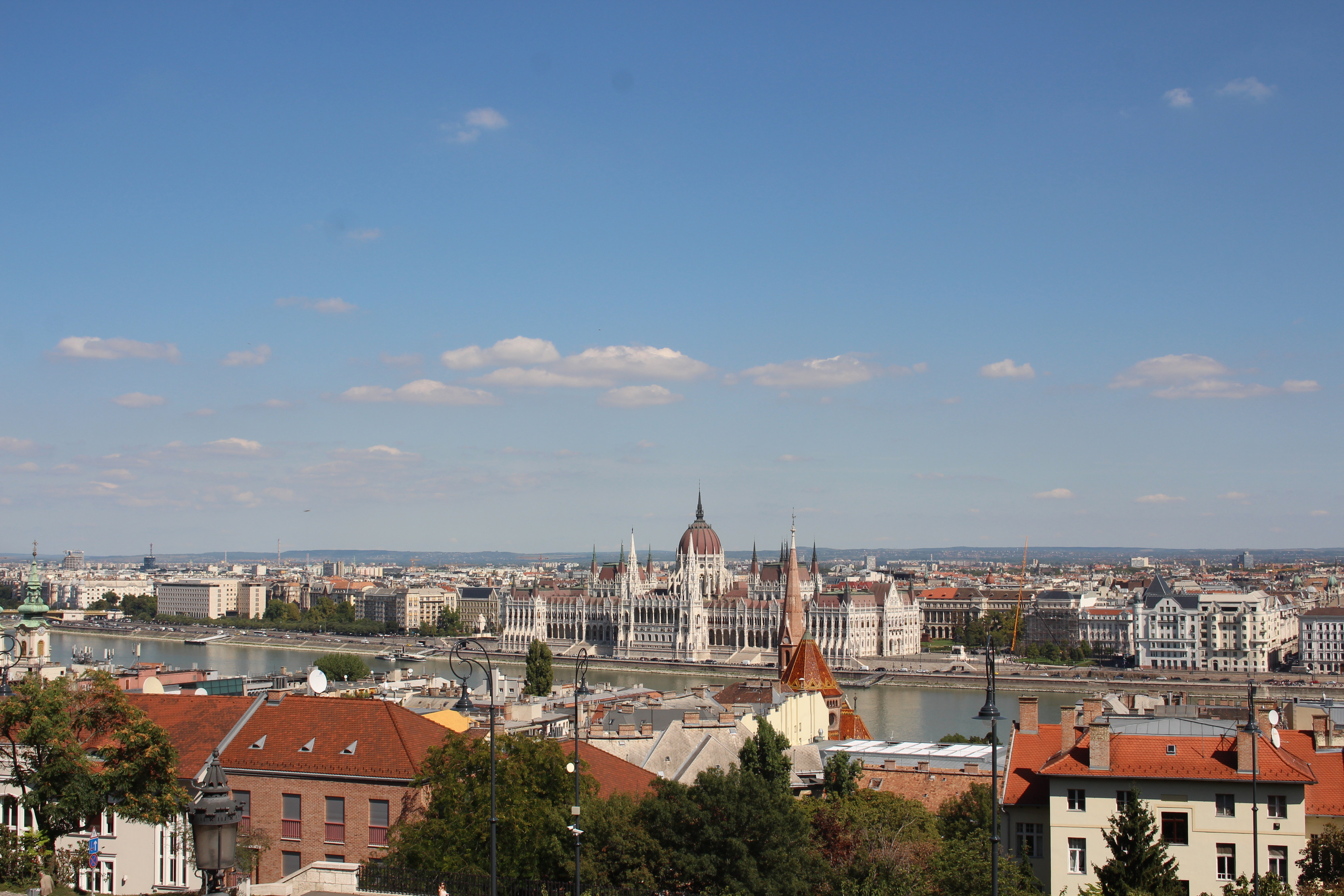
Recently I have discovered that there is a Muslim tour of Budapest that is conducted by a Hungarian Muslim covert. It is called the Budapest Walk Shop, or BUPAP, but its focus is more on getting normal Hungarians to understand Islam and the current Muslim community. Their site does not seem to be working so I am not sure if they are still operating. However, based on some reviews online, it had become very popular with the locals and was helping to break down barriers and educate people about Muslims. Islam was brought into the spotlight when the Hungarian Prime Minister, Viktor Orban, launched a strong anti-refugee campaign, creating xenophobic and racist sentiments toward the relatively small Muslim community.
Islam in Hungary
Islam in Hungary has a long history that dates back to at least the 10th century. The first Islamic author to speak about a Muslim community in Hungary was the famous Muslim Geographer Yāqūt al-Ḥamawī (d. 626/1229), who writes in his famous geographical dictionary about Bashgird students from Hungary (الهنكر) who studied in Aleppo. According to these students, there were thirty Muslim villages in Hungary at the time (Mu‘jam al-Buldān, 1:323). However, in the 11th century, some laws were passed that subdued Islam and coerced Muslims to eat pork, attend church, intermarry, and forgo holding services for Jumu‘a. This eventually led to the disappearance of the Muslims and their professions altogether. The Ottomans under Sultan Sulayman the Magnificent entered Hungary after the Battle of Mohács in 1526. From 1541, they started to control the central part, but their rule ended in 1699. Some immigration from other parts of the Ottoman lands and local conversions to Islam took place during their time, but the territory remained largely Christian. The Ottomans were relatively religiously tolerant, unlike in Royal Hungary where the Habsburgs repressed other Christians. The 150-year Ottoman period left behind a legacy of Turkish architecture, as well as changes in the local cuisine. However, many of the Muslim sites have not survived after 300 years.
According to the 2011 Hungarian census, there are only 5,579 Muslims in Hungary, making up only about 0.057% of the total population. The actual number of Muslims though is thought to be much higher after an influx of about 200,00 asylum seekers to Hungary since 2014. The majority of the Muslims live in the capital. 60% of them have Arab origins, and 30% are from different backgrounds like Turkish, Persian or African with about 10% native Hungarian. There are many Muslim students in the various universities in Hungary, from Pakistan, Bangladesh, India and Arab countries. We met a few students from Pakistan in Budapest. It appears that education is much less expensive in Hungary, easier to get into, and scholarships are also available.
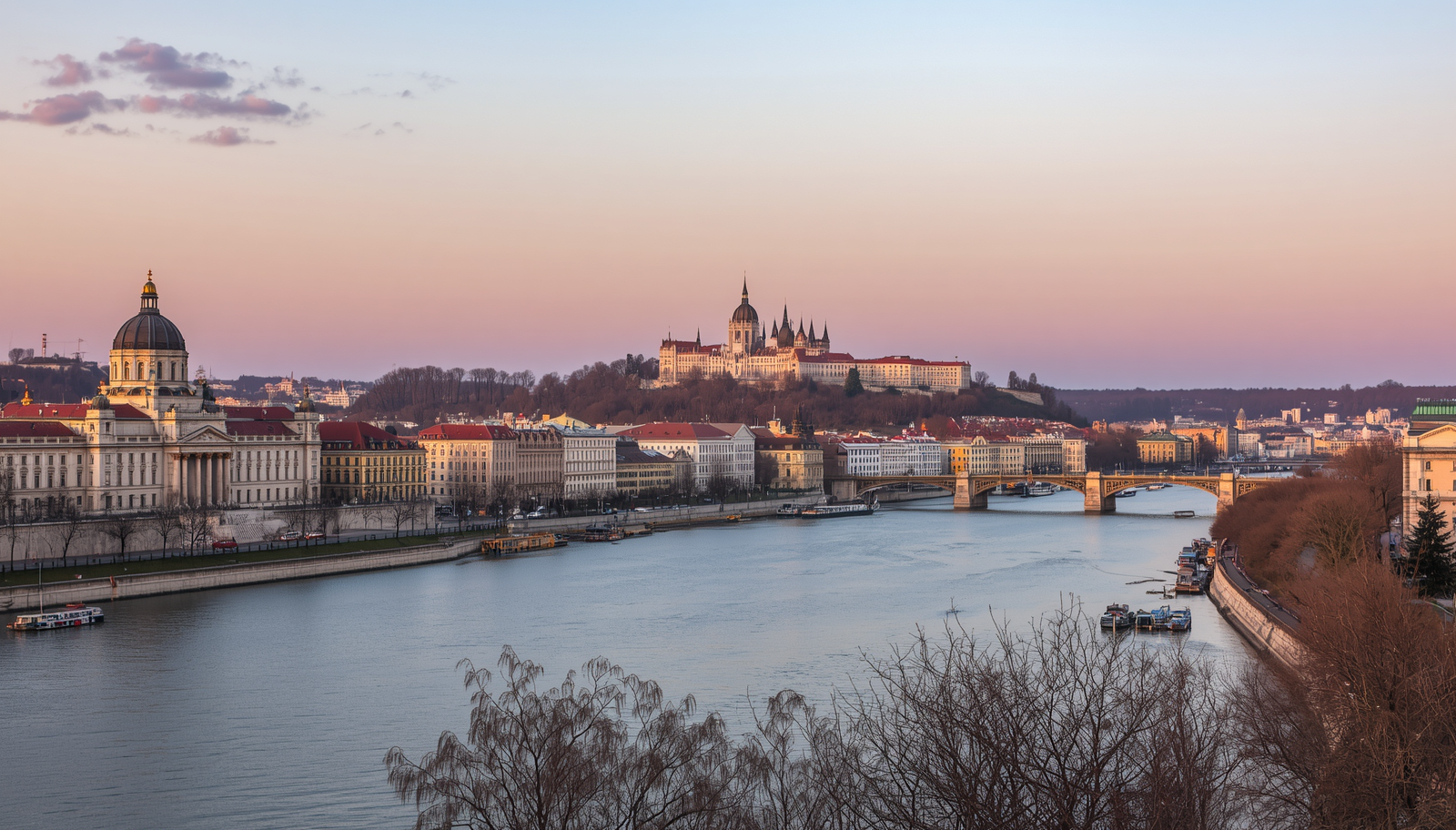
The tour was excellent and the guide was very knowledgeable. We covered both sides of the city, Buda and Pest along with the following sites: the Parliament, the Chain Bridge, Buda Castle, Matthias Church, Saint Stephen’s Basilica, The Fishermen’s Bastion (no fisherman there), Liberty Square, and the Danube Promenade. The impression I got was that Hungry has had a troubled past, having been under the Hapsburgs and communism, and only as recently as 1989 emerged from behind the Iron Curtain and is now working hard on building itself up. Apparently, Prime Minister Orban’s plan to get rid of the refugees did not pass. Hungary should embrace the Muslims as they are hardworking people; we hope they will bring about positive change to the country.
The Hungarian Language
One of the things I notice quite quickly about the Hungarian language is that it has a very interesting and melodic sound to it. I am interested in languages and obsessed by accents so I was curious to learn more about this. Hungarian is very different to the languages spoken by its neighbours, which tend to be Indo-European languages. Hungarian comes from the Uralic region of Asia and is spoken by only thirteen million people in the world. The tour guide said it is one of the most difficult languages to learn. I found out later that it contains fourteen vowels. So along with the basic “a, e, i, o, u” it also includes a further nine variations on these: á, é, í, ó, ö, ő, ú, ü, ű. The pronunciation of each is slightly different and can change the meaning of a word completely. He said the only other language that bears any similarity to it is Finnish (and Estonian). Coincidently, I visited Finland a month later in October 2019 and was able to corroborate this point; Finish sounded very similar.
The tour ended at 1:40 pm up at Fisherman’s Bastian in Buda Castle. From there we descended the steps and walked along the river bank to find something to eat. We made do with some pastries. After this, we proceeded to visit the one prominent Muslim site in Budapest, the Tomb of Gül Baba.
Wednesday Afternoon at Gül Baba’s Tomb
Gül Baba (d. 1541) was an Ottoman sufi, poet and companion of Sultan Sulaymān the Magnificent. He took part in a number of campaigns in Europe and died shortly after the Ottoman conquest of Buda. His octagonal tomb (called türbe, in Turkish) is located on Mecset (mosque) Street, Budapest. It is a short steep walk to reach it atop a hill. It was originally built by Ottomans between 1543 and 1548. However, it was converted into a Roman Catholic chapel by the Jesuits, who renamed it St Joseph’s Chapel after the Hapsburgs took the area. It then came under private ownership of János Wagner who allowed access to Muslims. In 1885, the Ottoman government had it restored, and it was declared a national monument in 1914. Apparently, it is now the property of Turkey and after a large-scale renovation in 2018, the site was inaugurated by the Hungarian prime minister Viktor Orbán and Turkish president Recep Tayyip Erdoğan. Surrounded by beautiful gardens, is a very peaceful place that offers a panoramic view all the way to the Danube. We had a quick look around the small museum and then asked for a place to pray, since our Ẓuhr prayer was due. They apologised saying the facility did not have a place for prayer. The staff are all non-Muslim. However, they did specifically open the locked tomb for us to say our fātiḥa while not allowing any of the other tourists inside. We renewed our wudu’ in their clean lavatory and later prayed in a secluded section of the beautiful gardens. We then had a really interesting discussion with the Hungarian guard at the facility. He revealed that he always feels amazing calmness, peace, and tranquillity every time he is on duty here, which is sometimes overnight too, and when he manages to get his best sleep. He said what he feels here is different to what he has felt at any other place. He was very passionate about his feelings.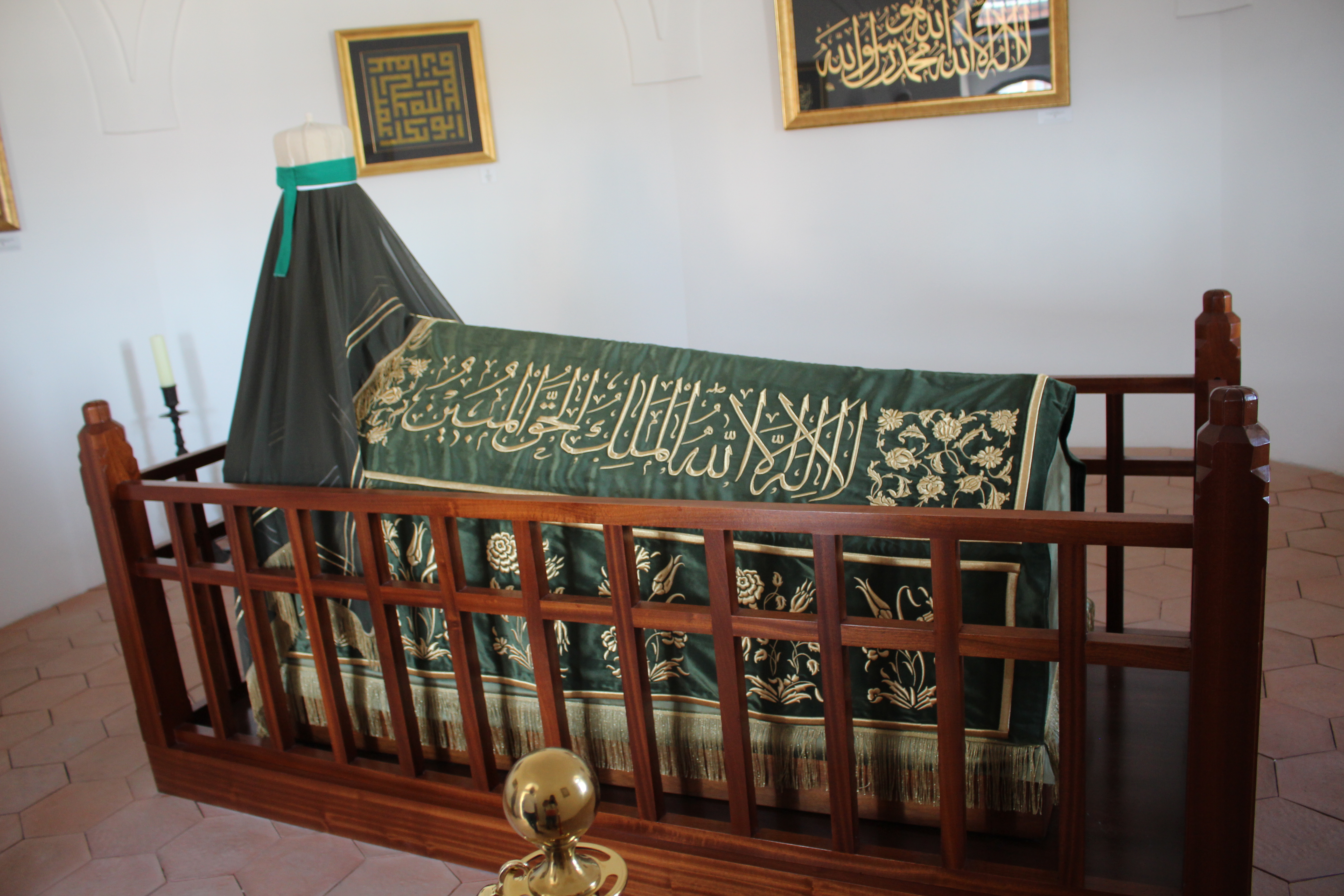
After saying goodbye to him. We walked back down towards the main road to catch a tram to our next destination. Someone in one of the first masjids we visited had told us to go to the Chinese Market if we wanted to purchase gifts for home. Unfortunately, when we reached there, it was just about all shut. We asked around for a masjid. There were some Christian Arabs there who conversed with us in Arabic and informed us of a nearby masjid used by the market traders. However, we were unable to locate it. Instead, a Turkish man picked us up and drove us to a ḥalāl restaurant for lunch. It was without surprise a Turkish restaurant.
Wednesday Evening at Budapest Mosque
From here, we went back to the Budapest Mosque. This mosque is very large with three floors and parking lot, and funded by Qatar; hence, it is referred to as the Qatari Mosque. It was opened in Ramaḍān 2011 and has a weekend school/madrasa for about 200 children. The mosque has been converted from an existing building, because building a Grand Mosque ground up would be two or three times more expensive, and fulfilling the permits requirements would not have been easy either.
A few Pakistani brothers were at the mosque. Brother Janzeb and Rahmatullah insisted that we should drink tea with them. At least two of them stay and work in the mosque and some of them are married to Hungarian women and explained some of the challenges with that. They said that the women convert to Islam and start praying and practicing, but many of these marriages don’t seem to last long. Maybe it is due to the cultural differences. We met some medical students there too.
We performed ‘Aṣr prayer and ended up staying until ‘Ishā’ discussing this part of the world with the brothers. Brother Janzeb insisted that I give a small talk after Maghrib prayer, and so I did. The Imam was a Yemeni shaykh, we met him and returned to our flat.
Thursday 5th September 2019 (Budapest)
Our return was scheduled on the Polish LOT 2201 flight at 7.20 am so we had to wake up early and catch a special bus for the airport. Alḥamdulillāh, we made it in time, caught the flight and landed at London City Airport at 9 am.
Concluding Thoughts
Vienna is an elegant, cultured and refined city, and is considered one of the most beautiful cities in the world. It has an “old fashioned” atmosphere to it, and did not appear artificially modern. It has been the centre of arts and classical music, as many of the composers were from here, but this part did not interest us much. The city felt very safe and was very clean, and we did not see too many scruffy looking run-down areas either. The Austrians are known for their orderliness and organisation. We did hear a comment that Austrians like things to be very elegant and beautiful on the outside, even if it is rotten on the inside. We did not stay long enough to confirm if this is true. The language spoken here is technically German, but an Austrian variety.
On the other hand, Bratislava, which is just 50 miles (80 km) down the Danube, is strikingly different. It is part of Eastern Europe and one can tell it is the capital of an emerging country. It has a small town feel to it with some very nice-looking classical buildings in the old section of town. The old town feels authentic and is not overdone. The steep cobbled paths are nice and quaint. It contains none of the glitz and refinement that we observed in Vienna and is much more subdued and contained. The train station is run down and neglected, and we found the streets that lead from there to the old town to be shabby and very quiet.
Budapest felt like a mixture of the two cities. It is very large and feels like a big city too. It is historically made up of two cities, Buda and Pest, and between the two runs the Danube River. It has some very well kept and imposing historical buildings and opulent mansions. However, the streets beyond the central tourist area contain many scruffy apartment buildings, stained tobacco-brown by urban pollution, and darkened at night from the dim street lighting. However, there is a lot of urban renewal work taking place. Overall, it is an interesting and curious place to be, and not as expensive as Vienna.
Additional Travel Notes
Currency: Euros in Vienna and Bratislava, Forints in Budapest
Travel: Taxis are considerably more expensive. The least expensive option is public transport. Purchase a 24-hour travel ticket, which works for the airport in Vienna as well. In Budapest, there is a special airport bus #100 for 900 forints (about £3.50) extra. We took this one as it was probably quicker. There is another bus #200e, which the normal pass will cover to the airport at no extra cost. Group travel tickets can be purchased for 3300 forints for up to 5 travellers for 24 hours, or 10 single tickets for 3000 forints.
In all three cities, there are hardly any security barriers at train and metro stations. You have to purchase the tickets at the kiosks or vending machines, and validate them before boarding at the blue boxes by inserting them into the slots to be stamped. There are no security guards to check this most of the time. If you are not used to this process, you may forget to validate your tickets and get on the train. Make sure to validate, as there is a hefty fine if one is caught travelling without validation.
Abdur-Rahman Mangera
Completed in July 2021
[1] https://freetourbratislava.com/free-city-castle-tour
[2] https://www.bbc.co.uk/news/world-europe-33986738
[3] https://www.generationtours.com/budapest/free-tour-of-budapest